
The piano is a keyboard instrument that produces sound by striking strings with felt-covered hammers. Musicians classify it as both a string and a percussion instrument, because a striking action sets its strings in motion rather than bowing or plucking. The piano can play softly or loudly depending on how firmly you press each key. This wide dynamic range gave rise to its full original name, the pianoforte, meaning soft-loud.
1. Origins and Design Concept #
Bartolomeo Cristofori developed the piano in Italy around the year 1700. He wanted an instrument that could vary its volume according to the player’s touch. Earlier keyboard instruments such as the harpsichord plucked their strings and could not easily change loudness, which limited their expressive range.
Cristofori’s innovation was a hammer mechanism that struck the strings and then immediately fell away. This let the string vibrate freely. Above all, this touch-sensitive action is the defining characteristic that separates the piano from the keyboard instruments before it.
2. The Keyboard #
A standard modern piano has 88 keys. These comprise 52 white keys and 36 black keys, spanning just over seven octaves. The white keys correspond to the natural notes. Meanwhile, the black keys group in alternating sets of two and three, and they correspond to the sharps and flats.
This repeating pattern of twelve notes per octave lets a player orient themselves anywhere on the keyboard. The consistent layout is one reason teachers often use the piano to introduce students to music theory. It also helps students visualize the structure of scales and chords.
3. The Action and Hammer Mechanism #
When you press a key, it operates a lever system known as the action. This system propels a felt-covered hammer toward a set of strings. The hammer strikes the strings and rebounds immediately, so it does not dampen the sound it has just produced.
A separate part called the damper rests against the strings. It stops their vibration when you release the key. This coordinated sequence happens in a fraction of a second. As a result, it translates the speed and weight of a keystroke into variations in volume and tone.
4. Strings, Frame, and Soundboard #
The strings sit under substantial tension across a cast iron frame. This frame is strong enough to withstand the combined pull of every string. Lower notes use longer, thicker strings, while higher notes use shorter, thinner ones, often grouped in pairs or threes per note.
Beneath the strings lies the soundboard, a large wooden panel that amplifies their vibration. Without the soundboard, the strings alone would produce only a faint sound. In short, the board’s resonance gives the piano its fullness and carrying power.
5. The Pedals #
Most pianos have three pedals, and each one alters the sound in a distinct way. The rightmost damper pedal, often called the sustain pedal, lifts all the dampers. As a result, notes continue to ring after you release the keys.
The leftmost soft pedal reduces volume and alters tone. Historically, it shifted the action so hammers struck fewer strings. The center pedal varies by instrument. On many grand pianos, though, it is a sostenuto pedal that sustains only the notes held at the moment you press it.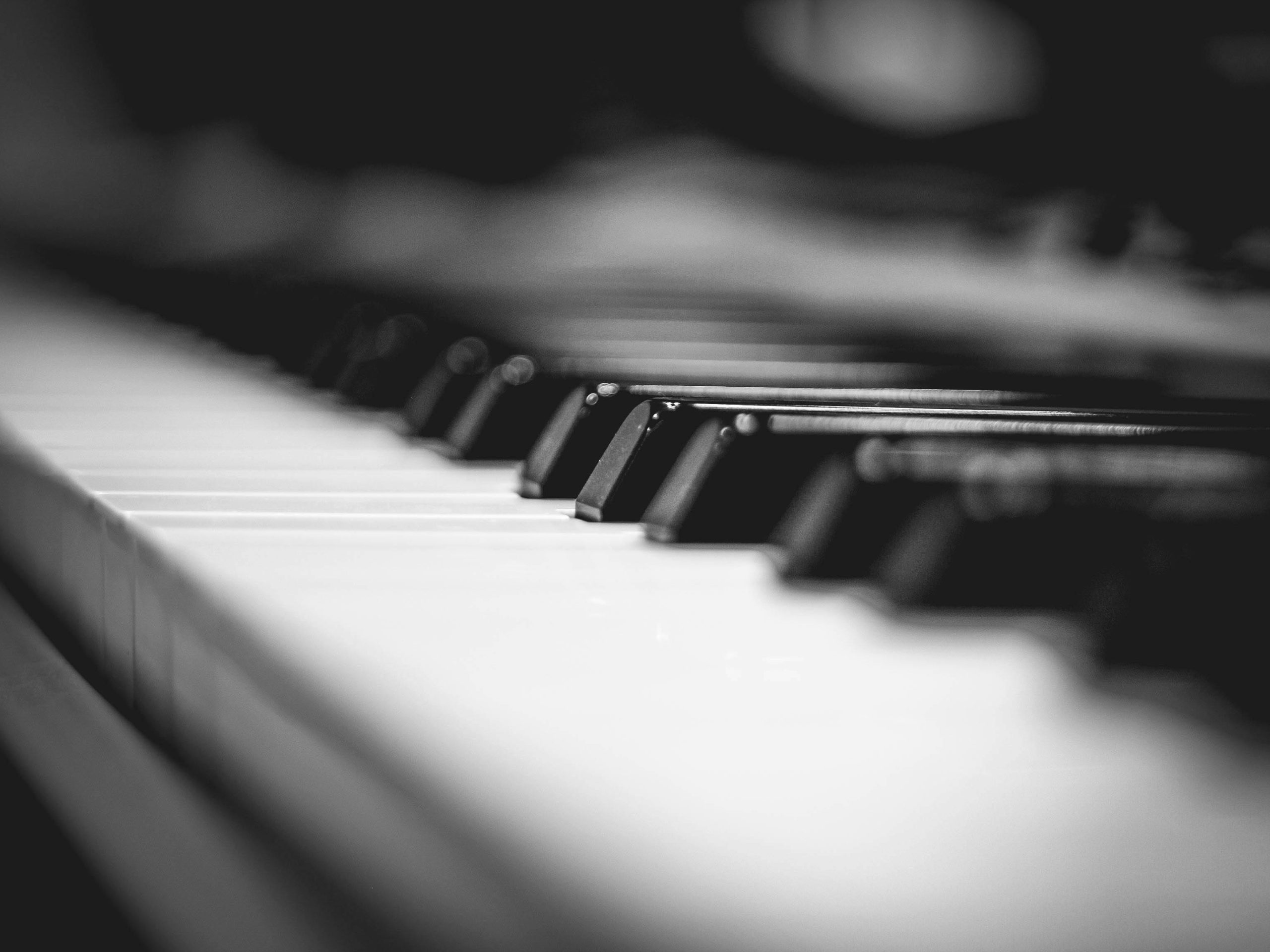
6. Grand and Upright Configurations #
Pianos come in two principal forms. In a grand piano, the strings and soundboard lie horizontally, and gravity helps the hammers return to rest. This design supports rapid repetition of notes, so performers and advanced students generally prefer it.
In an upright piano, the strings and soundboard stand vertically to save floor space. For that reason, it is a common choice for homes and studios. Both forms share the same fundamental mechanism. They differ mainly in size, string length, and the orientation of the action.
The Chopin Academy of Music Approach #
The Chopin Academy of Music offers private piano lessons for students from beginner through advanced levels. Each student follows a program of study tailored to the individual, building technique, musicianship, and repertoire over time. Instruction covers not only playing but also the theory and listening skills that support long-term progress. To round out that foundation, students may also join our group classes in theory and ear training.
The Academy began in the Issaquah, Sammamish, and Bellevue area of Washington, and it is now expanding to North Scottsdale, Arizona. Our internationally trained faculty brings more than twenty years of teaching experience in the one-on-one tradition of a dedicated community music school. Explore our full programs of study, or schedule a complimentary consultation to begin.


