
The flute is a woodwind instrument that produces sound without a reed, which distinguishes it from most other members of its family. The player blows air across an opening in the instrument and splits the airstream to set the internal air column vibrating. Although we classify it as a woodwind, the modern concert flute is typically made of metal. This choice reflects the material’s acoustic and mechanical advantages rather than the family name.
1. How the Flute Produces Sound #
The flute is an edge-blown instrument. The player directs a focused stream of air across the edge of the embouchure hole. As the airstream splits against that edge, it sets the air inside the tube vibrating and produces a tone.
This method contrasts with reed instruments, where a vibrating reed generates the sound. Because the flute relies entirely on the shaping of the airstream, embouchure control is central to a clear, stable tone. In other words, the position and tension of the lips shape everything the listener hears.
2. The Transverse Design #
The modern concert flute is a transverse, or side-blown, instrument. In other words, the player holds it horizontally to the right rather than pointing it downward. The player then blows across the embouchure hole located near one end.
This horizontal orientation distinguishes the concert flute from end-blown flutes such as the recorder. Moreover, the transverse design combines with the key mechanism to give the instrument its characteristic posture. As a result, the flute gains remarkable agility across a wide range.
3. The Three Sections #
The flute separates into three parts for assembly and storage: the headjoint, the body, and the footjoint. The headjoint contains the embouchure hole and has no keys. Because its shaping is critical to tone production, makers give it special attention.
The body is the longest section, and it holds most of the keys that both hands operate. The footjoint, at the far end, carries the keys for the lowest notes. Finally, correct alignment of the three sections during assembly affects both comfort and intonation.
4. The Boehm Key System #
The modern flute uses a key mechanism that Theobald Boehm developed in the nineteenth century. This system relies on a network of keys, pads, and rods. Together, they cover and uncover tone holes that would otherwise sit out of reach or grow too large for the fingers.
Boehm arranged the tone holes for acoustic accuracy rather than finger convenience. He then linked them mechanically so they stayed playable. As a result, this design greatly improved the flute’s intonation and evenness, and it became the standard for the modern instrument.
5. Producing Different Pitches #
A flutist changes pitch in two ways. First, pressing keys lengthens or shortens the vibrating air column to select a note. Second, changes in air speed and embouchure let the player move between registers by overblowing.
By adjusting the airstream, a flutist can sound higher octaves using similar fingerings. However, this technique requires refined breath and lip control. Above all, mastering the relationship between fingering and air control is fundamental to playing accurately across the instrument’s full range.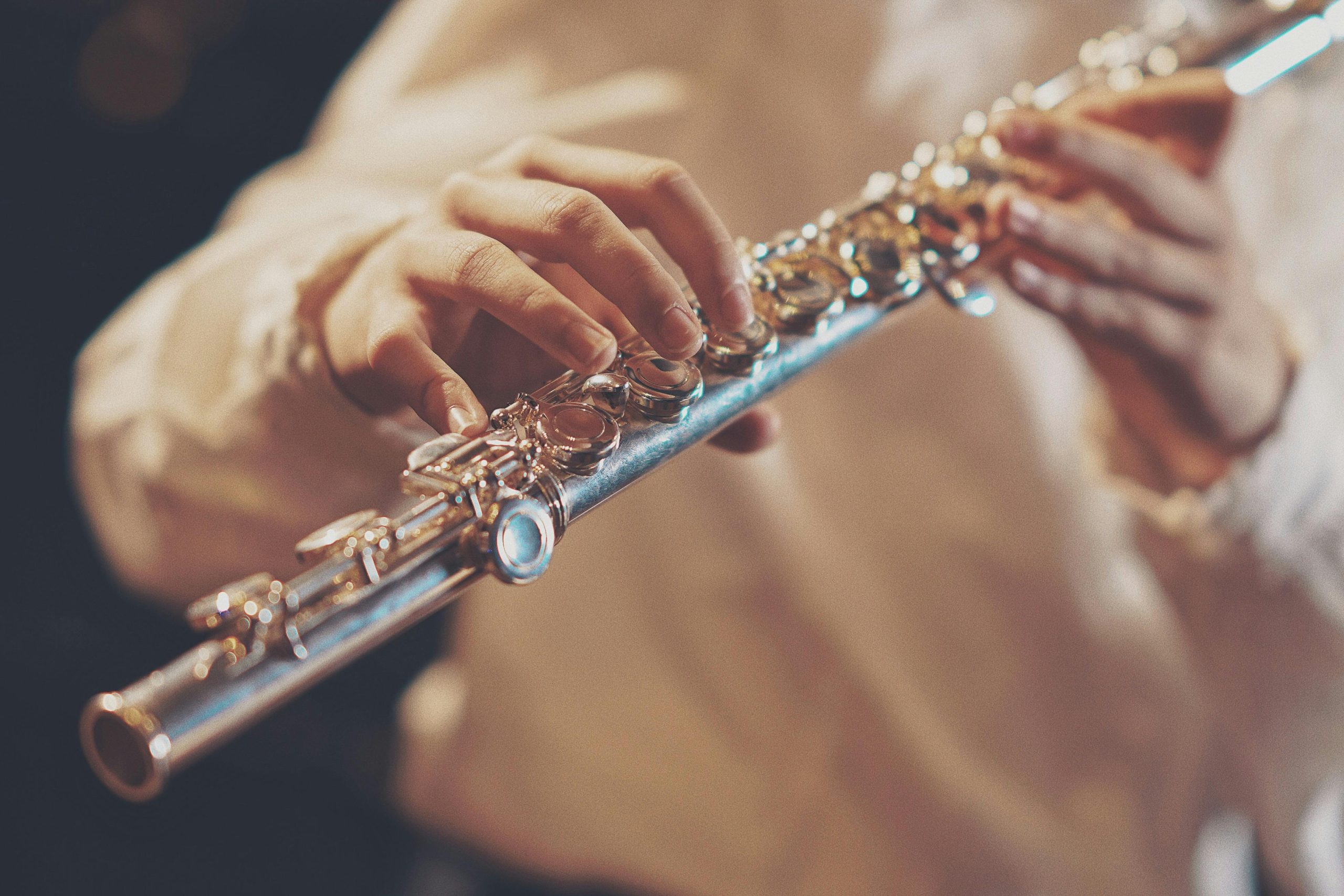
The Chopin Academy of Music Approach #
The Chopin Academy of Music provides flute lessons focused on high-level preparation for solo and ensemble playing in a supportive, enjoyable environment. Each lesson builds tone, breath control, technique, and repertoire through a program tailored to the individual. Moreover, we welcome students beginning band study as well as advancing players. To round out that training, students may also join our group classes in theory and ear training.
Our internationally trained faculty brings more than twenty years of teaching experience across our Washington locations. In addition, a North Scottsdale, Arizona location is now joining. In every case, we offer flute study within a structured, individualized classical curriculum and a full program of study. To begin, schedule a complimentary consultation with our woodwind faculty.


